What works for a pool does not always work for a hot tub. Stabilizer is the clearest example.
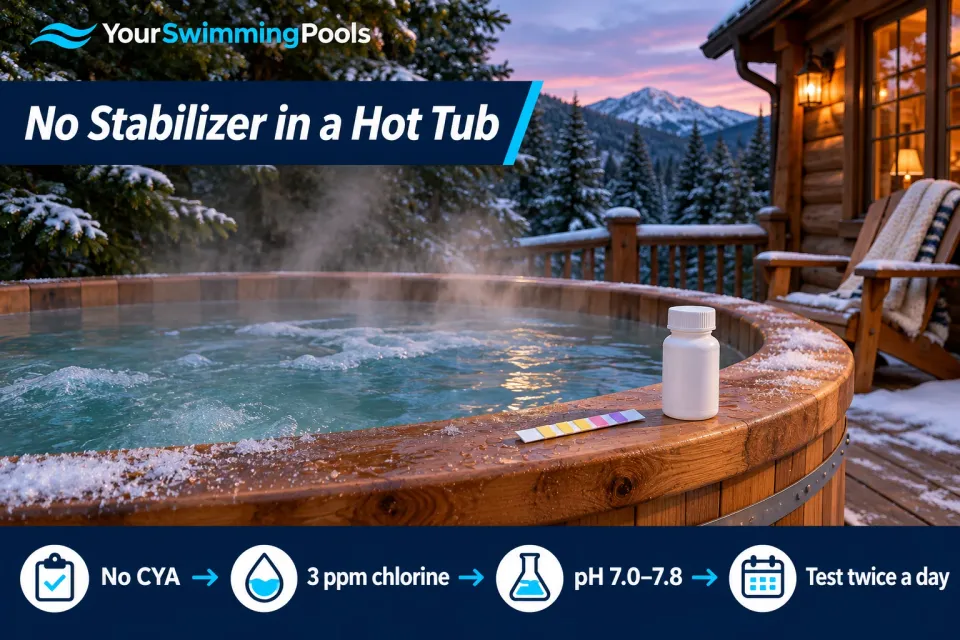
The short answer: the CDC recommends not using cyanuric acid or chlorine products with cyanuric acid in hot tubs, and Taylor Technologies lists stabilizer as "not recommended" for spas. The CDC's hot tub target is at least 3 ppm free chlorine with pH 7.0 to 7.8.
Part of: Cyanuric Acid in Pools: What It Does and the Level to Aim For, our overview of stabilizer.
Why not
The CDC says disinfection takes longer when cyanuric acid is present. A hot tub is warm, small and shared by several people at once, so it needs fast-working chlorine (our explanation). And the main reason stabilizer exists, protecting chlorine from the sun, matters less for a covered tub (our note).
Watch for hidden stabilizer
Trichlor tablets and dichlor granules contain cyanuric acid (CDC). Check the active ingredient on any chlorine product you put in a hot tub.
The CDC's hot tub numbers
| What | Hot tub | Pool |
|---|---|---|
| Free chlorine | at least 3 ppm | at least 1 ppm, or 2 ppm with stabilizer |
| pH | 7.0 to 7.8 | 7.0 to 7.8 |
| Cyanuric acid | not recommended | allowed (then at least 2 ppm chlorine) |
Testing: the CDC says to check chlorine and pH at least twice a day, and more often when the tub is in use by a number of people.
This page is about chlorine. A bromine hot tub has its own targets: follow your bromine product's label (our note).
As an Amazon Associate we earn from qualifying purchases. We have not tested these products.
Test kit A test kit that reads free and total chlorineThe CDC calls a DPD test kit the most accurate option for home pools; test strips are less accurate. Follow the kit's own instructions.
Sources
- CDC: Home pool and hot tub water treatment and testing (no cyanuric acid in hot tubs, 3 ppm, pH, testing)
- Taylor Technologies: LSI calculator and target ranges (spa: not recommended)
Sources read on November 6, 2026, unless a date is given. Product labels change: the label on the product you buy always wins.
