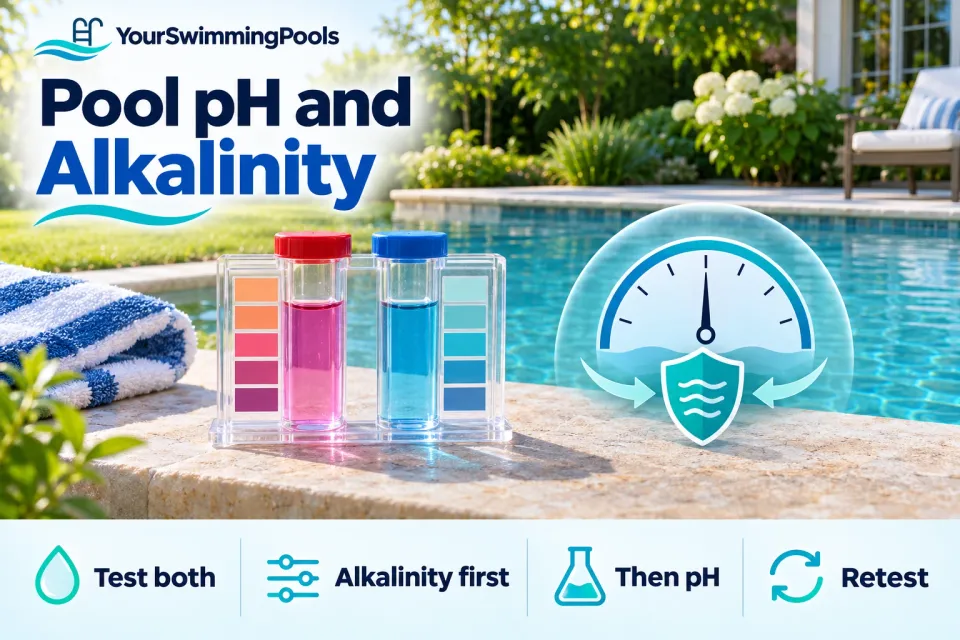
pH and total alkalinity are the two numbers that cause the most confusion on a pool test. They sound alike, they move together, and the same chemicals change both. This page explains how they work together and points you to the right fix for your reading.
The short version: pH is how acidic or basic the water is right now. Total alkalinity is the buffer that holds pH in place. The CDC's pH range for home pools is 7.0 to 7.8. Adjust alkalinity first, then pH (Taylor Technologies). Acid lowers both; baking soda mainly raises alkalinity; soda ash mainly raises pH.
As an Amazon Associate we earn from qualifying purchases. We have not tested these products.
Test kit A test kit that reads pH and total alkalinityEvery step on this page starts and ends with a test. A drop-based (liquid) kit or test strips both work; follow the kit's own instructions.
How pH and alkalinity work together
pH runs from acidic (below 7) to basic (above 7); 7 is neutral (Better Health Channel). Total alkalinity is the sum of the alkaline chemicals in the water, and it stabilizes pH: the Better Health Channel says pH can become unstable when alkalinity is too low, and TroubleFreePool calls alkalinity what "stabilizes pH and prevents it from rapid change".
The link works both ways. Raising alkalinity can also raise pH (Better Health Channel), and high alkalinity makes pH drift upward faster (TroubleFreePool). That makes alkalinity one common factor behind a pH that will not stay put; aeration and acidic products are others (see the table below).
The target numbers
| Source | pH | Total alkalinity |
|---|---|---|
| CDC (home pools) | 7.0 to 7.8 | no number given |
| Taylor Technologies | 7.4 to 7.6 | 80 to 120 ppm |
| TroubleFreePool (liquid chlorine or salt) | 7.2 to 8.0 | 50 to 90 ppm (another TroubleFreePool page: 60 to 90) |
| Arm & Hammer | 7.2 to 7.8 | 110 to 150 ppm |
| Better Health Channel | 7.0 to 7.6 | no number given |
The alkalinity ranges differ because the sources assume different pools. TroubleFreePool explains that the common 80 to 120 ppm range assumes trichlor or dichlor tablets, which are highly acidic; with liquid chlorine or a salt system it recommends lower alkalinity, to slow pH rise. Pick one source and stay with it (our advice).
Which page fixes your reading?
| Your test says | Go to |
|---|---|
| pH high, alkalinity in range | how to lower ph in a pool |
| pH high, alkalinity high | how to lower alkalinity in a pool (acid lowers both) |
| Alkalinity high, pH normal | high alkalinity but normal ph |
| pH low, alkalinity low | how to raise alkalinity with baking soda first |
| pH low, alkalinity in range | how to raise ph in a pool |
| pH keeps going up | why does pool pH keep rising? |
| pH keeps going down | why does pool pH keep dropping? |
Quick answers
- Should you adjust alkalinity or pH first? Alkalinity first.
- Is high pH safe to swim in? What 7.8 and 8.0 mean, with the CDC range.
- Low alkalinity in a pool: is it safe to swim, and what to do.
The chemicals, compared
| Chemical | pH | Alkalinity |
|---|---|---|
| Sodium bicarbonate (baking soda) | slight rise | raises |
| Soda ash (sodium carbonate) | raises | slight rise |
| Muriatic acid | lowers | lowers |
| Dry acid (sodium bisulfate) | lowers | lowers |
From the chemical reference on Taylor Technologies' LSI calculator page. More detail: soda ash vs baking soda, muriatic acid vs dry acid and muriatic acid for pools.
Tools
Every dose depends on your pool volume: start with the pool volume calculator. The pool alkalinity calculator gives the baking soda dose, and the LSI calculator tells you whether the water as a whole is balanced, corrosive or scale-forming.
Sources
- CDC: Home pool and hot tub water treatment and testing (pH 7.0 to 7.8)
- Taylor Technologies: LSI calculator (order of adjustment, chemical reference, target ranges)
- TroubleFreePool: ABCs of pool water chemistry (alkalinity ranges by chlorine type, pH stability)
- Arm & Hammer: How to use baking soda for pool maintenance (pH and alkalinity targets)
- Better Health Channel (Victoria State Government): Swimming pools, water quality (pH scale, low alkalinity and unstable pH)
Sources read on November 4, 2026. Product labels change: the label on the product you buy always wins.
